 breast.oncosurgery@gmail.com
 +91 9871413426
 Home
Home Testimonials
 Blogs
Blogs Contact



Do Air Fryers Increase Cancer Risk? Expert Insights by Dr. Deepak Jha, Breast Cancer Specialist in Gurugram
Do Air Fryers Increase Cancer Risk?
- News
- Air Fryers & Cancer
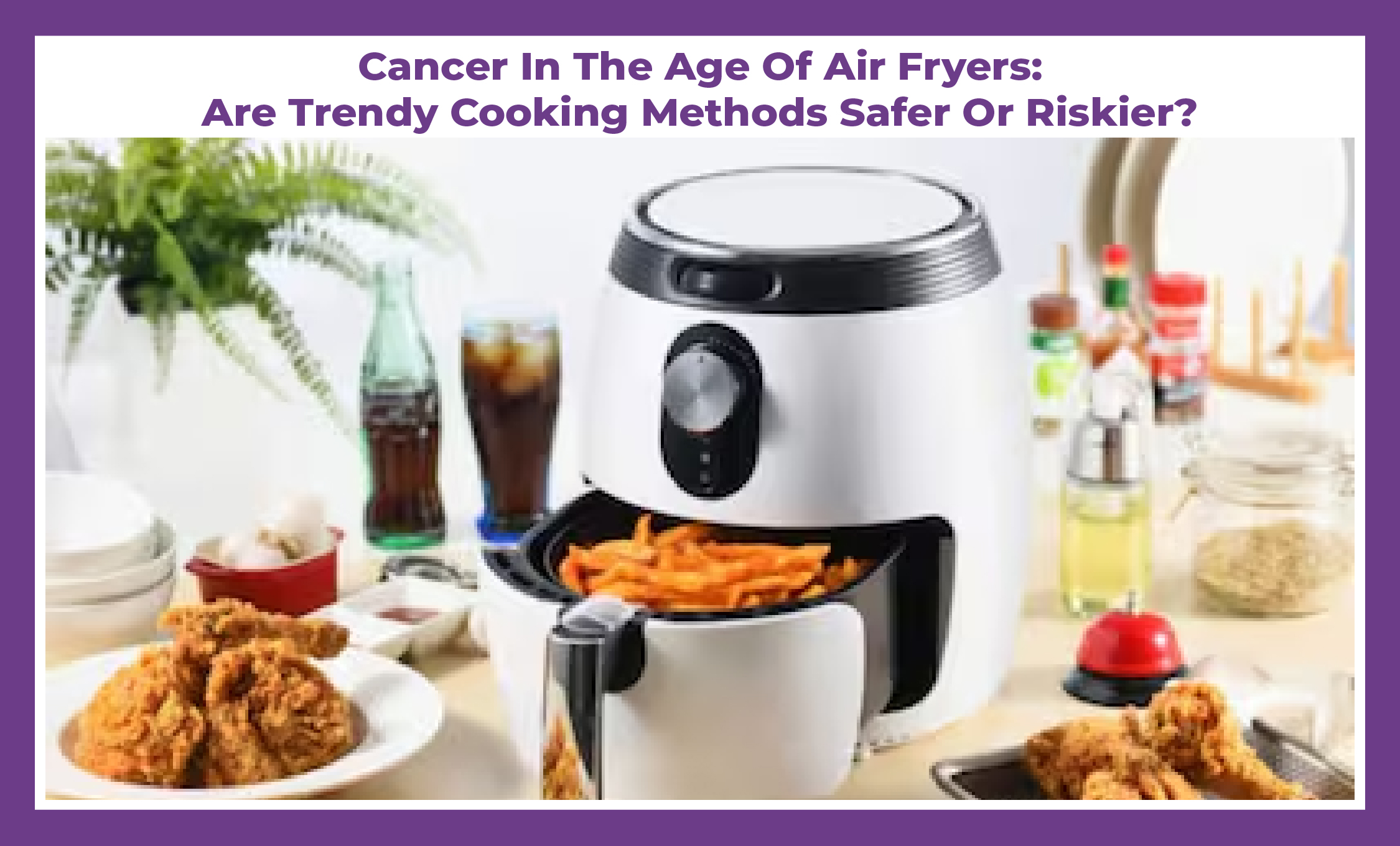
Are air fryers safer or riskier for cancer? Oncologists explain acrylamide, meat toxins, processed foods, cooking habits, and how to use air fryers safely
Air fryers have become a staple of the modern kitchen, promising crispy food with a fraction of the oil and mess of the traditional frying. As people search for healthier cooking options, many are swapping deep fryers and oven trays for this trendy appliance. But with rising concern around lifestyle-linked cancers, one question is gaining momentum: Does switching to an air fryer actually reduce cancer risk, or are there hidden dangers we aren’t talking about enough?
Two leading oncology experts break down the science, the myths, and the real risk.
Air fryers: Healthier or just Hype?
According to DR. Deepak Jha, Sr. Consultant, Surgical Oncology, Artemis Hospitals, the popularity of air fryers stems from understandable reasons.
“People like air fryers because they say they can make food crispy with very little oil. But as they get more popular, a lot of people are wondering if they are really safer or if they have hidden dangers, especially when it comes to cancer."
Air fryers use rapid hot air circulation to cook food, significantly reducing the need for oil. This cuts down the intake of unhealthy fats and reduces exposure to harmful compounds that develop when oil is repeatedly heated at high temperatures.
Dr. Jha explains, “This naturally cuts down on the amount of bad fats you eat and may stop the formation of some harmful compounds that come from frying. In that way air fryers are usually thought to be better for you."
But as he points out, the story is not that simple.
The Acrylamide Issue: What Happens to Starchy?
The biggest concern associated with air fryers is acrylamide, a chemical that forms when starchy foods especially potatoes and bread are cooked at high temperatures. This chemical has been shown to increase cancer risk in long-term animal studies and remains a subject of ongoing research in human health.
Dr. Jha clarifies, “Air fryers may still make some acrylamide, but research shows that they usually make less than deep frying. But there is still a risk, especially if the food is cooked until it is very brown or burnt."
This means cooking technique not just the appliance plays a major role in determining risk.
Dr Ullas Batra, Co-Director–Medical Oncology & Chief, Thoracic Medical Oncology, RGCIRC, explains exactly how acrylamide forms, “When starchy foods such as potatoes or bread are cooked at high temperatures, whether deep-fried, baked, roasted, or air-fried—they produce acrylamide, a compound linked to a potential increase in cancer risk in long-term animal studies.
He adds, “Air fryers, which work by circulating very hot air, can reach temperatures similar to ovens or deep fryers, making acrylamide formation possible. That said, studies show that air fryers may reduce acrylamide levels compared to deep-frying."
Processed Foods: The Hidden Culprit
Air fryers often take the blame, but experts emphasise that the real danger lies in what people cook, not the appliance itself.
Dr. Jha warns, “A lot of people use air fryers to cook frozen fries, nuggets and snacks that come in a box. These foods already have bad fats and chemicals in them and heating them up to high temperatures can make it even more likely that bad chemicals will form."
Ultra-processed foods, pre-seasoned snacks, and frozen fried items carry far greater risk than fresh produce, regardless of cooking method.
What About Meat? Understanding HCAs and PAHs?
While acrylamide forms in starchy foods, high-heat cooking of meats produces HCAs (heterocyclic amines) and PAHs (polycyclic aromatic hydrocarbons) both linked to increased cancer risk.
Dr. Batra explains, “Grilling, boiling, and pan-searing can generate heterocyclic amines (HCAs) and polycyclic aromatic hydrocarbons (PAHs), both of which are associated with increased cancer risk."
But when it comes to PAH formation, air fryers may actually be a better option:
“Air fryers heat meat rapidly, but because the fat drips away and there is no direct smoke exposure, PAH formation is significantly lower than in traditional grilling."
This means that air frying meat is generally safer than grilling over an open flame or charring.
It’s Not the Appliance, It’s the Habit
Despite the attention air fryers get, oncologists agree on one critical point: Cooking appliances do not cause cancer, patterns of eating and cooking do.
Dr. Batra states, “An appliance does not cause cancer; patterns of eating and cooking do. Overcooking, charring, and routinely consuming ultra-processed or high-fat foods carry far greater long-term risk then the choice of cooking gadget.”
And Dr. Jha reinforces this, “If you use them correctly, air fryers can be healthy tool but they won’t keep you from getting cancer. It matters a lot more what you eat then what gadget you use.”
Ultimately, it is dietary balance not a specific appliance that determines long-term health oucomes.
How to use Air-Fryers Safely: Expert-Approved Tips
Both experts recommend easy, science-backed practices:
- Avoid extremely high temperatures
- Do not overcook or char food
- Marinate meats (reduces HCA formation)
- Choose fresh ingredients instead of processed foods
- Include more vegetables, legumes, and whole grains
- Clean the air fryer regularly to avoid burnt residue buildup
Dr. Batra advises, “To minimize risk, avoid cooking food at excessively high temperatures for long periods, prevent charring, marinate meats to reduce HCA formation, and incorporate more vegetables. Legumes, and whole grains into everyday meals.”
These habits matter far more than whether you use an air fryer, oven, or frying pan.
The Verdict: Are Air Fryers Safe?
Air fryers are generally safer then deep fryers, significantly safer than grilling, and healthier than relying on heavily processed ready-to-eat foods. They reduce oil intake, promote home cooking, and limit exposure to some harmful compounds.
But they are not a magical solution and they cannot override unhealthy eating patterns.
The real path to lowering cancer risk lies in:
- Choosing whole, unprocessed foods
- Avoiding charring and overcooking
- Using balanced cooking methods
Disclaimer: This article has been adapted from content originally published by News 18
Subscribe Newsletter
Get all the information, latest updates, and articles delivered directly in your inbox